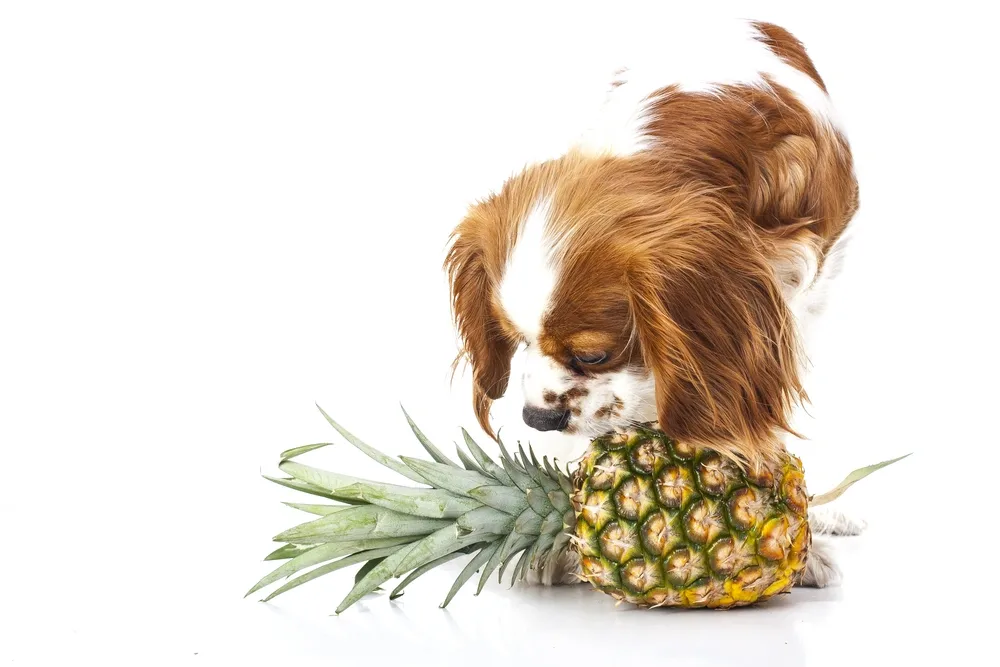
Many dog owners wonder if sharing a slice of pineapple with their furry friend is safe. The good news is that dogs can eat pineapple in moderation, and it can be a refreshing, nutrient-rich treat. Packed with vitamins, minerals, and hydration benefits, pineapple offers a tasty alternative to processed snacks. However, like all human foods, it should be given in the right way to avoid digestive issues.
Before you let your dog indulge in this tropical fruit, it’s important to know which parts are safe, how much to feed, and when to avoid it. Understanding both the benefits and the risks will help you make the best decision for your pet’s health.
Content
Is Pineapple Good for Dogs?
Pineapple can be a healthy addition to your dog’s diet when served in small amounts. This tropical fruit is rich in vitamin C, manganese, and dietary fiber, which contribute to digestion, immune health, and overall vitality. The natural sweetness makes it an appealing snack for many dogs.
That said, pineapple should be an occasional treat, not a replacement for balanced dog food. Too much can lead to an upset stomach or weight gain due to its natural sugar content.
Nutritional Value of Pineapple
Fresh pineapple contains:
Vitamin C – Strengthens the immune system
Manganese – Supports bone health and metabolism
Bromelain – Aids digestion and may reduce inflammation
Fiber – Promotes healthy digestion
Water – Helps keep your dog hydrated
Health Benefits of Pineapple for Dogs
When given in proper portions, pineapple can:
Aid digestion with bromelain enzymes
Support immune function through antioxidants
Hydrate your dog, especially during hot weather
Provide a low-calorie alternative to processed treats
Add dietary fiber for better gut health
Some dog owners also try pineapple to discourage poop-eating (coprophagia), although results can vary.
Risks of Pineapple as a Dog Treat
While pineapple has many benefits, overfeeding can cause problems. The high sugar content can lead to weight gain or blood sugar spikes in diabetic dogs. Too much fiber can cause diarrhea or gas. Large chunks may be a choking hazard, especially for small dogs.
Always monitor your dog after introducing pineapple for the first time and watch for signs of stomach upset or allergic reactions.
Can Dogs Eat Pineapple Skin, Core, or Leaves?
Can Dogs Eat Pineapple Skin? No. The tough, spiky exterior can injure the mouth and digestive tract.
Can Dogs Eat Pineapple Core? No. The fibrous core is difficult to chew and digest, posing a choking risk.
Can Dogs Eat Pineapple Leaves? No. These can be tough, irritating, and unsafe if ingested.
Only the soft, fleshy part of the fruit should be fed to your dog.
How Much Pineapple to Give Dog to Stop Eating Poop?
Some owners give their dogs a few small chunks of pineapple daily to deter poop eating. The theory is that pineapple changes the taste and smell of feces, making it less appealing. While not scientifically proven, 1–2 small chunks for a medium-sized dog may be worth trying, as long as it’s done in moderation.
Can Dogs Eat Pineapple Juice?
Small amounts of fresh pineapple juice are generally safe, but it’s not the best choice. Juice contains more concentrated sugar and lacks the fiber found in whole fruit. Avoid store-bought juices with added sweeteners, as they can be harmful to dogs.
Can Dogs Have Cooked Pineapple?
Yes, as long as it’s plain and free from added sugar, syrup, or seasonings. Cooking can reduce some of the vitamin content but still offers flavor and hydration.
Tips to Safely Feed Pineapple to Dogs
Always remove the skin, core, and leaves.
Cut into small, bite-sized chunks.
Introduce gradually to see how your dog reacts.
Use fresh pineapple instead of canned.
Limit treats to less than 10% of your dog’s daily calorie intake.
Creative Ways to Serve Pineapple to Your Dog
Frozen Pineapple Cubes – Perfect for hot days.
Fruit Mix – Combine pineapple with other dog-safe fruits like Watermelon, Strawberries, Mango, Cantaloupe, and Blueberries.
Homemade Popsicles – Blend pineapple with water and freeze into ice cube trays.
How Much Pineapple Can Dogs Eat?
For most medium-sized dogs, 2–3 small chunks are enough. Puppies and small breeds should get even less. Too much pineapple can lead to digestive problems, so start small and adjust based on your dog’s tolerance.
Can Puppies Have Pineapple?
Yes, but only in very small amounts. Puppies have more sensitive stomachs, so start with a tiny piece and monitor closely for any negative reactions.
What if My Dog Gets Sick from Eating Pineapple?
If your dog shows signs of vomiting, diarrhea, or discomfort after eating pineapple—or if they ingest the skin, core, or leaves—contact your veterinarian immediately.
Other Fruits Dogs Can Eat
In addition to pineapple, dogs can safely enjoy Watermelon, Strawberries, Mango, Cantaloupe, and Blueberries in moderation. Avoid grapes, raisins, and cherries, as they can be toxic to dogs.
Final Thoughts: Can Dogs Eat Pineapple
Pineapple can be a sweet, refreshing treat for your dog when served properly. Always stick to small portions, remove any inedible parts, and avoid overfeeding. By treating pineapple as an occasional snack, you can offer your dog a burst of tropical flavor while keeping them happy and healthy.
Learn more about the personality, care, and traits of the Domestic Shorthair Cat in our detailed guide.
FAQs: Can Dogs Eat Pineapple
Are pineapples toxic for dogs?
No, pineapples are not toxic for dogs, but they should be served fresh and in moderation.
Are any fruits toxic to dogs?
Yes, grapes, raisins, and cherries are toxic and should always be avoided.
Which fruits are good for dogs?
Fruits like watermelon, blueberries, strawberries, mango, and cantaloupe are safe in small amounts.
Can I give my dog pineapple to stop eating poop?
Yes, small daily pieces may help reduce poop eating, though results vary between dogs.

 Mark Maas